I recently attended two in-person summer gatherings organised by different communities. Both gatherings were pretty distinct, you could even say niche, and explicitly aimed at bringing people together who share the same specific interest.
The weather was good for both of them: sunny but not too hot, a little breezy, ideal conditions for relaxed socialising.
I left both gatherings feeling kind of empty. And it really got me wondering about our capacity for connection.
Particularly because both gatherings brought together people who share some form of marginalisation. Which made them unique, because there aren’t really any other spaces for people from both groups to meet others like them. So the potential for building community was huge.
But in both cases, the organisers didn’t facilitate connection. They left people to their own devices - most of them somewhat shy, too polite or insecure to risk looking silly by approaching a stranger.
Perhaps the organisers thought that bringing like-minded people together in the same place was enough, and that things would naturally unfold from there.
But the power dynamics between organisers and attendees, between the regulars and newbies and between people of different identities was of course at work - whether we subscribed to them or not.
And without an active effort to counter them, the dominant patterns played themselves out.
When I arrived at one of the gatherings, the main organiser, who checked my ticket and gave me a name badge, said to me: “I know everyone here, so if you want an introduction, just let me know.”
This was probably well-intended, but it didn’t feel like an open invitation. Was I really going to ask them to take me around the 20 people who were already sitting in a circle so I could introduce myself?
To me, it felt like the opposite of inclusion. Their statement made clear to me that I wasn’t part of this club (yet?) and served to establish them as the person who knew everyone.
Facilitation is about intentionally shifting the default power dynamics.
Without it, you will very likely to end up with the same people taking up space as always, and those who have less belonging and safety remaining on the margins.
(This is something I see all the time in workplaces too. No wonder people complain about having too many boring meetings in their diaries where the senior people do all the talking!)
Most of us need a bit of encouragement, some structure and the explicit permission to come out of our shell and connect with others.
You don’t have to be a professional facilitator to provide that.
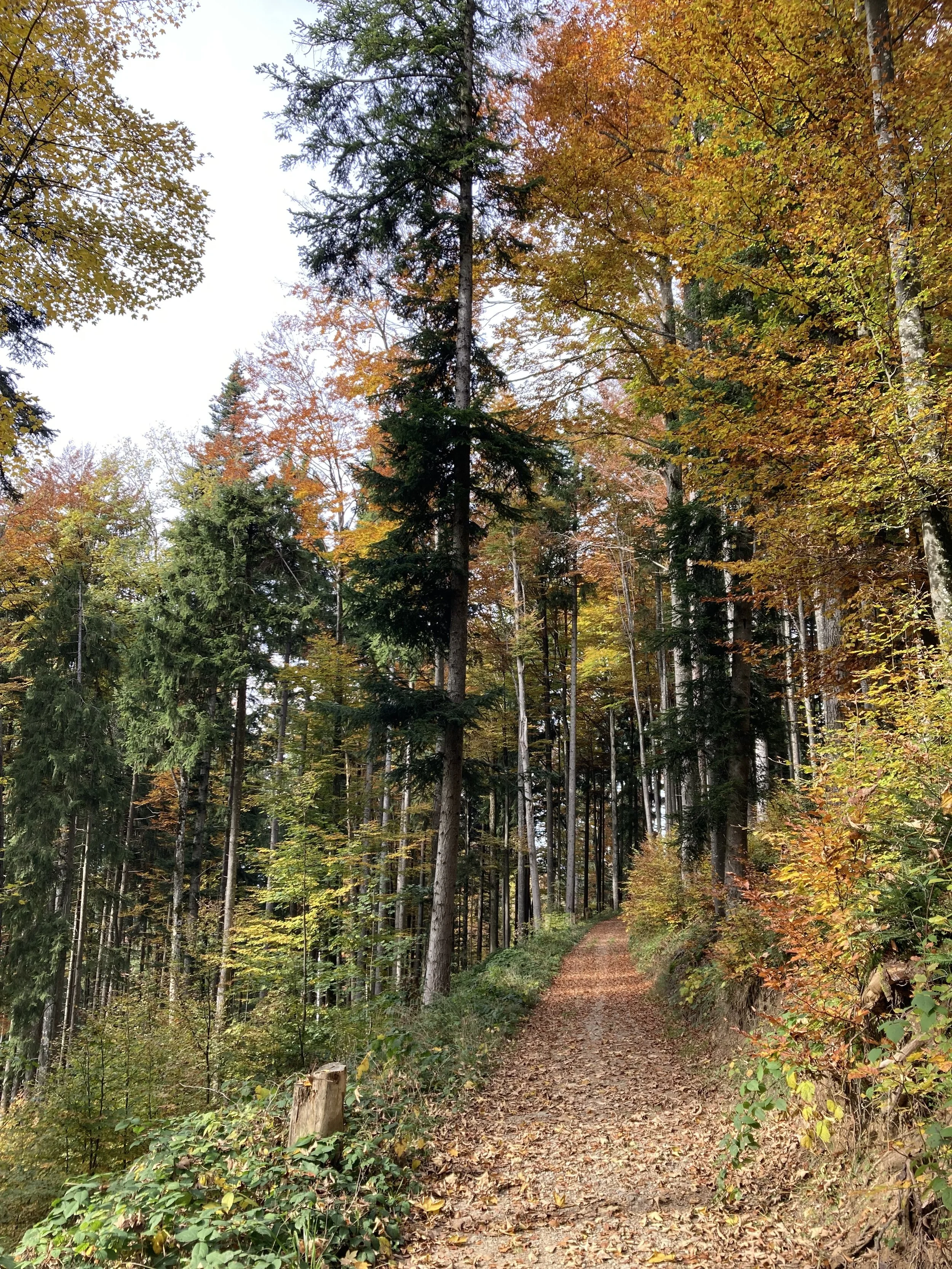
Photo of a footpath on a slope covered in autumn leaves leading into a forest of cedars and yellow and orange coloured trees.
Here are three tips for DIY-facilitating your next gathering in a way that actively fosters connection and community building:
Purpose: Tell people why you have convened them. This doesn’t have to be a polished speech. Find a moment, perhaps a little into the gathering, where you bring everyone’s attention together and remind them why they are here. You can also thank them for coming, but make sure you add something about the purpose.
Why? This creates an experience of shared meaning. It makes people feel seen and appreciated for why they are here, which goes deeper than simply being thanked for turning up.Structured moments: Create at least one invitation for facilitated connection between people. Make it optional, so nobody feels forced to participate. This can be a micro-moment, such as inviting people to tell the person next to them why this gathering matters to them, for 2 minutes. Or you could use slightly deeper questions or non-speaking activities through which people can connect. The best structured moments link people to the purpose.
Why? As the convenor, you are temporarily bringing everyone into the same experience / conversation, which creates cohesion in the group. By extending permission and a structure to connect with others, you are creating opportunities for people to widen their circle, which they can pick up on later in the gathering if they wish.Humour: Don’t be too serious about it. Your structured moment can be silly - like asking people at a cooking class to guess different types of pasta through dance moves, or to list the reasons why they almost didn’t come to the language exchange, or to share their most under-rated breakfast items at the early morning exercise session. Come up with a light-hearted question that relates to your event and give people a silly moment to share.
Why? It loosens us up, quiets nerves and reminds us of our shared humanity.
None of this is rocket science. But it takes is intention, some preparation and a bit of courage.
If it’s a little awkward at first, know that all you need to bring is the spark so that people have a chance to catch it. Then let them do the rest.
In times of profound disconnection, let’s use our gatherings to bring us closer together rather than make people question their belonging.
Because human connection is the antidote to the hatred, division and fragmentation we are being fed by those who want to exploit us in our isolation.
Our gatherings are one of the places we can counter that alienation in real time. And if you want to learn facilitation skills at work, get in touch.