Content note: Mention of covid denial, death
If I look around, I see people feeling the impact of the structures, order and logic of the system as we know it bristle, crumble and eventually collapse.
I’m seeing it in the tiredness in people’s bodies, in the cynicism with which they speak, in the frantic energy with which they move as if to outrun something, and in the way the sayings that once might have soothed our hearts just fall flat.
It’s a feeling of having gone past the expiry date of this current system, which is no longer gelling, making sense or giving us a basis on which to imagine our future.
We might be feeling this in our bodies, but I don’t think we’ve reached a point yet where we have truly acknowledged that we are at the end of something.
I see many people, including myself, moving in and out of denial that this is happening. There is a part of us that wants to hold on, that clutches at the possibility that, if we just try hard enough, we will eventually crack the code that will make everything okay.
Wishful thinking is a human response. It is trying to protect us from the devastating reality we’re in and the inevitable losses that come with it.
So I’m not saying never escape into an imagined place where things are okay. But I’m interested in how we can find our way back out of the deep denial and dizzying delusions that keep us stuck where we are.
What does moving through this time wide awake look like? Is it even possible?
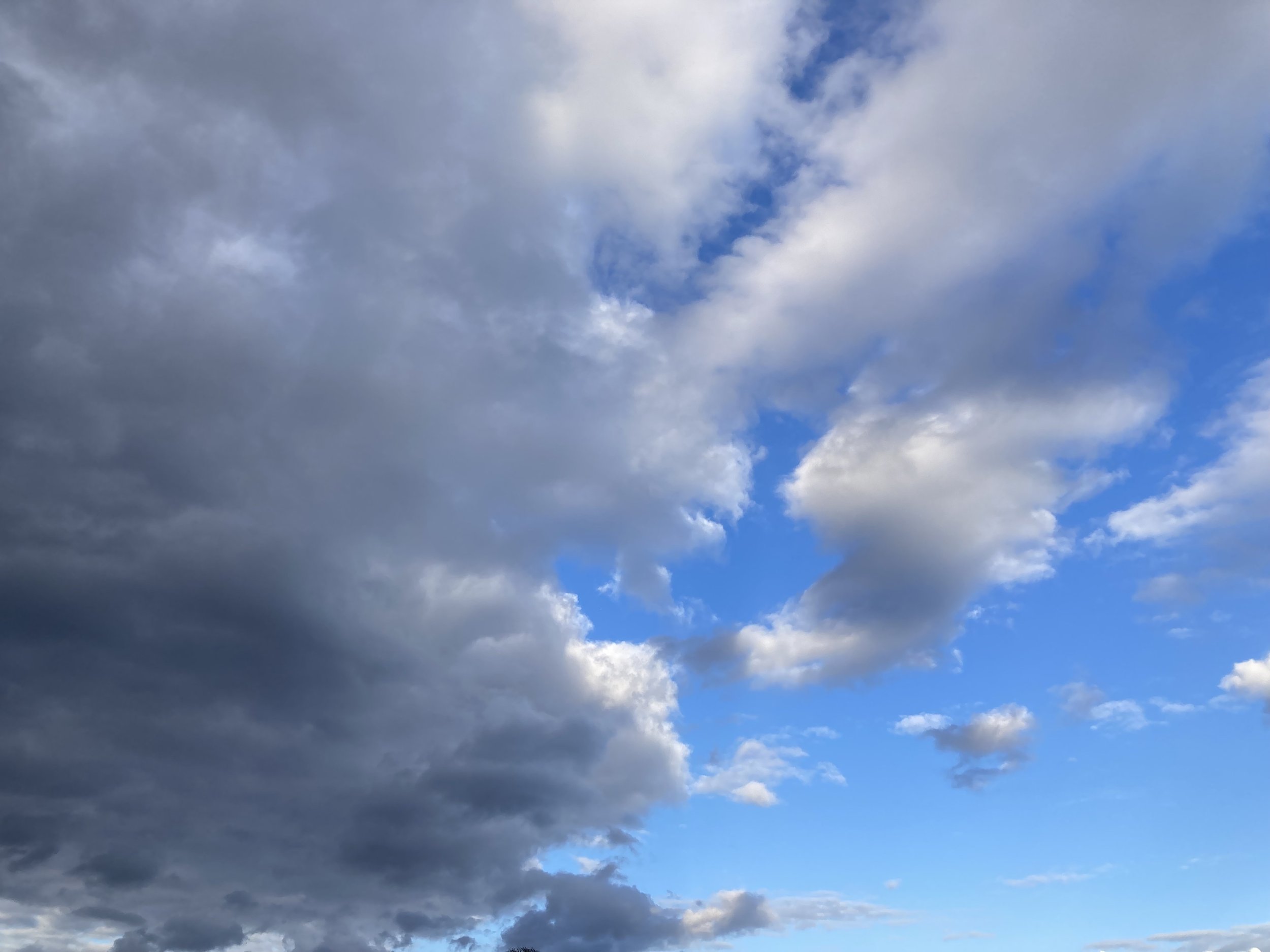
Photo of a contrasting sky with dark grey clouds in the left of the frame and bright blue sky right next to them.
Along with many other lessons, the covid pandemic has taught me a lot about what happens when we harden into denial and feverishly attempt to reconstruct a reality that cannot be resurrected.
Back in April 2020, Arundathi Roy’s famous ‘pandemic as a portal’ essay was shared widely and with genuine excitement.
In the early months of the pandemic, Roy had described with astute clarity what many of us only came to accept years later - that the world as we knew it had long passed its expiry date and could only be transported into the future in the shape of a “carcass”.
“Historically, pandemics have forced humans to break with the past and imagine their world anew. This one is no different. It’s a portal, a gateway between one world and the next.
We can choose to walk through it, dragging the carcasses of our prejudice and hatred, our avarice, our data banks and dead ideas, our dead rivers and smoky skies behind us. Or we can walk through lightly, with little luggage, ready to imagine another world. And ready to fight for it.”
What followed in the years after the publication of Roy’s article was a forceful shutting down of the possibility of “another world” people had gotten a glimpse of.
We chose to drag the carcass through the portal, with all its baggage in tow. Now the weight and the smoke and the stink of it has become undeniable.
We feel it in the lack of aliveness, the cycles of violence and destruction all around us, the millions of dead we haven’t even properly mourned. And it’s all adding up to the deep tissue exhaustion so many people are experiencing.
If we lean into that exhaustion rather than deny it, I believe we can find the shy glimmers of a different, more gentle, more vibrant world that was so forcefully, ruthlessly quashed and sent into a cultural exile.
The covid conscious sub culture is one place that has grown in that place of exile. It isn’t free of the things that plague our old world - avoidance, competition, judgement, jealousy etc. But it is a place that has a unique perspective on where we are, collectively.
It’s a place where people imagine a world that isn’t dictated by a death cult that regards our lives as expendable - especially the lives of sick and disabled, Black and brown, queer, trans, working class people, women, children, older, incarcerated people - anybody who deviates from the ‘fit white man’ model our capitalist world order is based on.
It’s a place where people fight with masks and whatever spoons they have available.
It’s a place where people struggle with being trapped in their homes, unable to go into public spaces that are filled with air carrying viruses that will further disable or kill them.
But it’s also a place where people are free. Many have given up on being liked or recognised. When wearing lipstick becomes pointless while your face is covered, you find other ways to decorate yourself that sit outside the norms of commonly recognised beauty standards.
We are used to being pathologised and our insistence on collective care being labelled as ‘health anxiety’.
What I see in the people who didn’t get intoxicated with pandemic denial is a focus on collective survival in the present and preparation for the future.
So that when things fall apart anew, we are ready to move with intention and care instead of shock and denial.
This, I think, is crucial. Not just in terms of being able to survive, look out for another and have the capacity to build something different from the debris that is left. But also because to put up a fight against something that is ending can be really damaging to our whole being, individual and collective.
“By encountering death many thousands of times”, writes Kathryn Mannix in her moving account of three decades working in palliative care, “I have come to a view that there is usually little to fear and much to prepare for.”
Facing uncertainty and the unknown are naturally among the things humans are most afraid of. There are many things to fear, but if we allow that fear to take over, we will be even less able to spot the portals that might lead us to a gentler place.
“The fear of the fear is the worst aspect of all”, Mannix recounts as one of the lessons she learnt from her dying patients.
This is what resisting denialism liberates us from, I think. When we engage with our fears, the dying world around us, grieve our many losses and the lives we could have had, something else gets revealed.
We may be trapped by the current conditions and, because of it, become liberated in our imagination at the same time.
That won’t be true all of the time. But I see it in big and small ways all around me, including in places where the stakes are so much higher and people still create “a flower inside the fire”.
This, I think, is the complexity we are being asked to learn to tolerate so that we can move through this with our hearts intact and the glimmer of something more beautiful still sparkling, if ever so slightly.