Embodiment as an antidote to dehumanisation
We’re not even two weeks into 2026, and it already feels like the world has entered a new level of instability.
The United States seems to be eyeing up a new country to invade every few days, laying imperialist claims on other peoples’ lands. Scores of civilians have been dying in the process - in Venezuela, in Iran, in Syria, in Gaza. But that’s not the focus of most media coverage, it’s just collateral damage.
The reports coming out of the ICE siege Minneapolis resemble more and more the often deadly raids by Israeli soldiers on Palestinian homes, mosques, schools and hospitals. Reports of Palestinians being terrorised and abducted by disguised military forces, including being shot while driving their car, are frequent. Usually the murdered person gets blamed for their own death because they were driving, looking, moving or speaking in the wrong way.
None of this is new. Historians have long pointed out that the inaugural function of the US police force was to catch and return enslaved people who had managed to escape. In New York, unidentified officers who snatched Black people off the streets (including free Black people who had never been enslaved) were literally called ‘the kidnapping club’. In response, communities set up night patrols and other ways of defending themselves.
The difference now is that they catch and deport people who managed to stay in the US altogether or who dare to resist what’s going down. And that one is being spared. Your skin colour, class, gender, age, nationality or immigration status will not protect you if you are seen as an obstacle to the power grab. Anyone can become collateral damage - or a source of free labour once detained.
Sarah Kendzior described it as “a country where officials act like death no longer matters”. Meanwhile, the criminals who are doing the shooting and committing genocide are cared for and walk free. Those protesting against atrocities end up being the ones locked up as terrorists.
To the human heart, it makes no sense. Watching state-sponsored death and dehumanisation at this scale is deeply disorienting to our sense of ourselves.
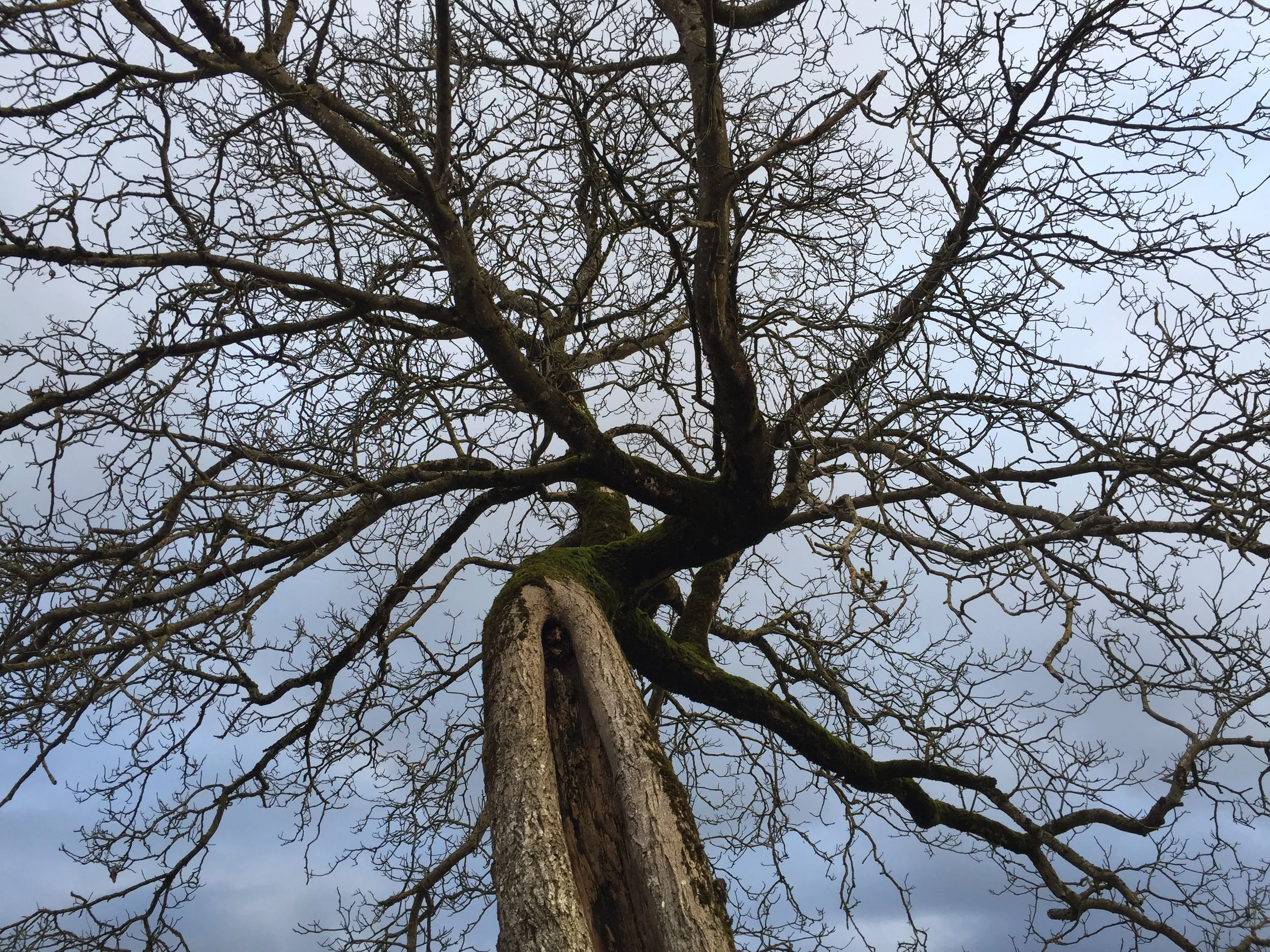
Photo of a bare winter tree with branches covered in moss growing in all directions, against a blue-grey sky. The camera is looking up from the trunk towards the canopy, and the branches are reaching into each corner of the image..
It’s important not to minimise the level of disconnection, grief and loss we are experiencing. It has an impact on all of us, no matter how safe and protected we may feel.
When we’re overwhelmed, dissociation can be a really effective coping strategy, sometimes life saving even. There is nothing wrong with it, and some people will have had to rely on it much more because of the conditions of their lives.
What helps me come back into my body when it’s safe to do so is remembering that our dominant capitalist culture encourages dissociation.
The pile-up of atrocities in such a short space of time are meant to desensitise us to one another, make us forget that we are intimately connected and dependent on each other. It’s by design. We are easier to control when we’re isolated and more likely to comply when we don’t feel the pain of our separation.
This goes back to the mind-body split, invented in the so-called Enlightenment, which is foundational to the dominant culture in this hemisphere. It considers cognitive skills to be superior to embodied knowledge. What counts are numbers, logic, profit, anything that’s measurable with a stick. The body gets neglected at best (just look at the widespread exhaustion, burnout, illness etc. all around us) and demonised at worst (think about the prevalence of ableism, racism, fat phobia, misogyny, transphobia etc.).
The mind-body split encourages dissociation because it doesn’t see the body as a source of insight. Emotions, pain, intuition etc. are mostly inconvenient and unreliable factors that distract from so-called fact-based thinking.
None of us, who have been socialised in this cultural context, are immune to this. In order to survive, we have had to internalise much of this logic. We have had to learn, for example, how to override our gut feeling, how to make ‘rational’ decisions or dismiss our emotions.
But so much of our understanding of the world and the decisions we make are shaped by our embodied knowing. By that I mean information we sense, remember or intuit in ways our conscious mind does not have access to. For example, our neuroception, which is how our bodies assess safety and danger in our environment, is controlled by the autonomic nervous system and therefore entirely unconscious. It’s how we know whether we’re in a physical space that is safe, or whether we can trust someone.
That kind of knowledge can be life-saving, and under heightened surveillance, military threat or even siege, we need it more than ever. It’s also what enables us to connect with other beings.
By treating our bodies as separate from our minds, we have abandoned a part of ourselves and our humanity.
Acknowledging this can be really destabilising, especially for people who have been working hard get by or even succeed in the dominant culture. So let's be gentle.
Acknowledging this is also what gives me hope and resolve in a moment like this. To me, embodiment is an antidote to a world that is trying to turn us all into robots or collateral damage.
If we listened to our bodies more, I don't think we'd be able to sustain the speed, the violence, the destruction and the dehumanisation that's happening at a collective scale.
When I bring embodiment into highly cognitive spaces, people can find it very uncomfortable, counter-cultural even. That's because it is. It can feel like confronting a part of world history in your own tissues.
It’s powerful and deeply subversive when you think about it. That’s what excites me and keeps me alive. Because there is something really tangible we can all do, wherever we are, that is phenomenally important.
In a time of mass dehumanisation, insisting on staying connected to our bodies - and therefore our humanity and that of others - is among the most powerful moves we can make.
That’s the work I’m committing to in 2026. Starting right here, with my own broken heart and my grieving soul that knows we are capable of so much more beauty, connection and freedom. Bit by bit, may we bring more of it into a world that would rather dismiss our embodied longings as fantasy.