How “antagonism to vitality” is threatening our collective survival
I’m not alone in feeling disturbed by the fact that - after a fifth heatwave and most of the UK in a severe drought, fires spreading in different parts of the country and trains coming off the rails in the heat - the government’s response has amounted to sending out an emergency text alert and banning disposable barbecues.
It feels as if they’re not even trying to be serious.
This isn’t new. The parallels with the early months of the pandemic make my stomach turn. As Dr Lucy Easthope puts it:
“Covid confirmed for me a way of approaching disaster that involved waiting until we were entirely marinated within the horrors of it before actually speaking openly on any of the necessary preparations.”
The default, culturally dominant response to crisis seems to be denialism and avoidance. Keep calm and carry on, even if the house is on fire.
It’s disturbing and infuriating to watch. And at the same time, I sense something deeper at work this time around, something that feels more like actively collaborating with the forces at play in order to let the crisis run its course with maximal impact.
For example, some people have leapt at the opportunity to declare that there is nothing that can be done to stop climate breakdown and so we may as well learn to “enjoy” the heat. All those avoidable deaths and destroyed homes be damned.
Apparently we can just get “used to” excess deaths, “learn to cope with” water and food shortages and accept that our infrastructure breaking down is “inevitable”.
If that’s where we are, what constitutes an actual crisis?
“The threshold for ‘apocalypse’ just keeps moving”, writes Richard Seymour in chronicling the age of the Pyrocene. He adds: “Some people would rather watch things burn than inconvenience capitalism.”
I think it’s worse than that. We’re not just inconveniencing the system, we are destroying the basis of our very existence.
Yes, rich people will be able to escape the wrath of runaway climate change for much longer than those most dispossessed, but until we have figured out how to live on Mars, nobody will be spared.
So what the hell are we doing? How have we become so apathetic about our own survival?
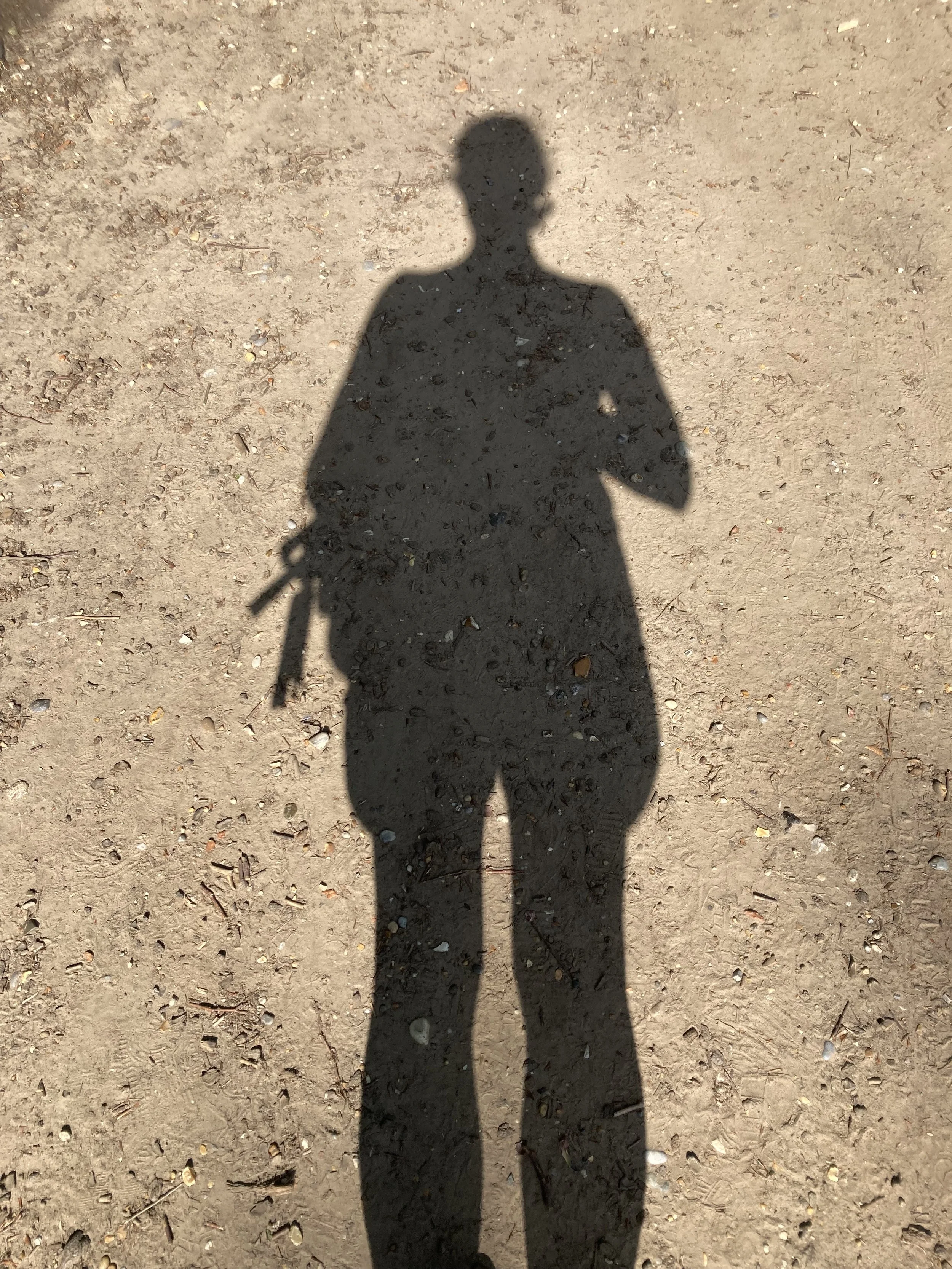
Photo of my shadow on a dried out brown earth.
I found some answers in Hannah Arendt’s writing on totalitarianism, which is experiencing somewhat of a revival.
In listing, with astute precision, the conditions that give rise to totalitarian regimes, Arendt describes a kind of nihilistic selflessness among the people who make up the masses that support its leaders. By selflessness** she means “the sense that oneself does not matter” or “the feeling of being expendable”.
This arises from a context where most people don’t have a bigger collective purpose to hold onto but instead feel overwhelmed by in the fatality of a doomed existence in a crumbling system (sounds familiar?).
In such a state, not even your own life holds value any more. Arendt writes:
“The old adage that the poor and oppressed have nothing to lose but their chains no longer applies to the mass men, for they lost much more than the chains of misery when they lost interest in their own well-being.”
When we stop caring about our own lives out of boredom and apathy - rather than for some greater good - we make way for the most terrible things to become possible.
Things like genocide, political repression, the scapegoating of minorities, the militarisation of borders, surveillance turning into warfare, tech billionaires stealing people’s work without credit or compensation, the complete destruction of our ecosystem with no plan for the future.
This doesn’t come out of nowhere. Arendt suggests this kind of “antagonism to vitality” she identified as pre-conditions for totalitarianism was preceded by “social atomisation and extreme individualisation”.
In today’s time, we might call it loneliness, alienation, stress, trauma or disconnection. For example:
We have the most technological tools, yet our lives are busier than ever.
The cost of living is rising while wages have been stagnating for decades.
We are being told that we’re all in this together and have to do more with less while some people are getting unimaginably rich.
The cultural demands to be healthy, young, fit and put together are everywhere, yet our stress levels are making us sick.
We are more connected than ever, yet loneliness has been declared a global ‘public health concern’.
When we are isolated, overworked, burnt out, under-appreciated, uninspired, stunted in our creativity because we are so preoccupied with survival, we can experience a “radical loss of self-interest, the cynical or bored indifference in the face of death or other personal catastrophes”, according to Arendt.
This can show up in smaller, subtler ways - for example, accepting that participating in ‘normal’ life means you will likely get covid repeatedly, which carries the risk of making you long-term disabled - or bigger, more extreme ways - for example, people participating in the now annual race riots that threaten and attack migrants and refugees or anyone who doesn’t look white enough to them.
Both point to the destruction of whatever remains of a ‘collective’. It’s as if we feel so utterly betrayed by the idea of a society we could belong to that we become hellbent on eliminating any remaining norms, behavioural codes and values that hold us together.
What Arendt saw in 1930s Germany was people being “satisfied with blind partisanship in anything that respectable society had banned, regardless of theory or content”.
This isn’t about being ‘edgy’. This is about whether or not we will make it as a species on this planet.
Francis Weller talks about us entering at least two generations of 'descent’ after thousands of years marked by an obsession with ‘ascent’ - progress, growth, expansion, an unsatisfiable hunger for more, more, more.
In that sense, letting go of the edifice of a society that hasn’t valued, protected or cared for most of its members is necessary for something else to be built from the ruins.
But if, in the process of shedding, we abandon the sacredness of life itself, there will be no one left to build anything new at all.
I come back to the body. If we can be in our body, even just for a fleeting moment. the miracle of life becomes inescapable. Every heartbeat and every breath that moves in and out is a sign of the wild, delicate, miraculous existence we’ve been gifted.
Perhaps we can’t feel reverence for life in its totality amidst so much destruction and hopelessness, but can we feel the relief of cold water touching our skin after another hot day? Or the comfort of a cool breeze after sunset? Or the smell of rain, when it finally comes?
At the end of the day, our life is all we’ve got. May we pause before we throw it on the pile of things our ravenous capitalist world has deemed to be expendable.
**This is different from, say, the selflessness of a freedom fighter who put their life on the line for the liberation of their people during the struggles for post-colonial independence in the 1960s. What Arendt describes is more of a self-abandonment without a bigger purpose.